
How Do I Renovate My Home Without the Stress?
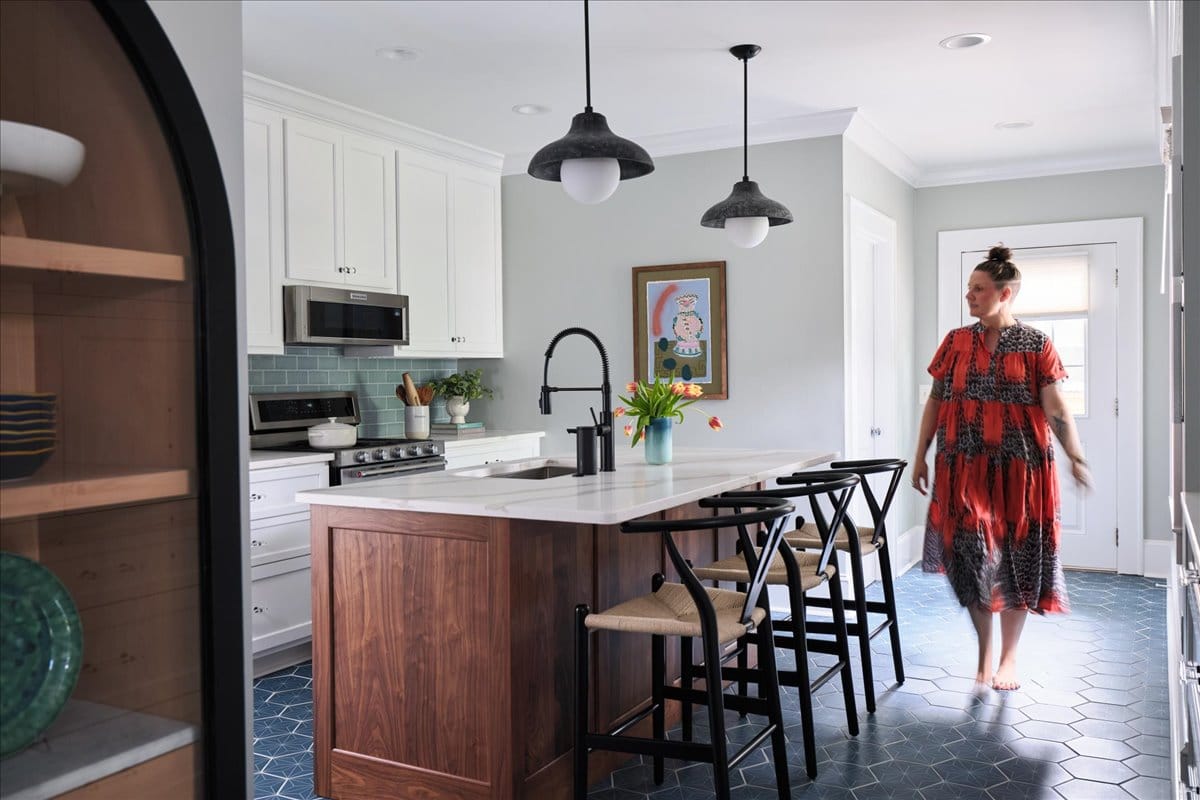
It’s 6:12 a.m. and you’re between patients when your contractor texts. “Shower tile is backordered 14 weeks. Grey or greige instead? I need to know today.” Ugh. Is it even possible to renovate your home without the stress?
That is the moment most renovations go sideways. Not the demolition, not the dust, not even the budget! It’s the two hundred small decisions that show up at the worst possible time, sent straight to you, at work, doing the job that pays for the renovation in the first place.
So how do you avoid the dreaded renovation stress? By making sure that nobody ever sends you that text. Because you’ve hired someone whose entire job is to have already answered it. (Hi there, it’s me!)
Renovation stress is a decision problem, not a construction problem
Physicians, attorneys, and CEOs are exceptionally good at making decisions. That’s their job. The problem is that a renovation asks for a different kind of decision, on a different schedule, in a field you’re just not familiar with. You likely have 21 years of experience in your field; I have 21 years of experience managing high-end construction and renovation projects.
Left to its natural course, renovation decisions happen too late, under pressure, with incomplete information. The plumber roughs in before anyone has picked the faucet. The electrician asks where the sconces go while you’re in a board meeting. The tile gets chosen from three samples the contractor happened to have in his truck.
None of those people are doing anything wrong. They’re doing their jobs. Their job is just not to design your house, and it is definitely not to protect your time.

Every decision gets made before the first wall comes down
The single biggest thing I do to remove stress from a project happens before a hammer is ever lifted. Every material, finish, fixture, and detail is specified in full before construction starts. Not most of it. All of it.
That work starts with a Design Strategy Session, where we nail down the scope, the realistic investment range, and the visual direction that guides everything after. Then we move through concept design and detailed design, and by the time your builder gets our specifications package, he has drawings, elevations, a complete finish schedule, and answers to questions he hasn’t thought to ask yet.
This is what makes the 6:12 a.m. texts (aka. renovation stress) disappear. The shower tile was chosen months ago, the lead time was known, and it was ordered before the walls came down. The boring greige tile was never even an option (thank goodness!).
One person owns the schedule, the orders, and the CALLS
Once construction begins, someone has to place orders, track deliveries, chase the vendor who ghosted, and coordinate with the builder when a delivery date is missed. On most projects, that someone is the homeowner, squeezing it in between everything else. On LMID’s design projects, it’s me.
We manage procurement and coordination from the first construction PO through installation. When the countertop fabricator needs a template date, I’m the one on the phone. When the sofa ships early and the house isn’t ready, it goes to receiving, gets inspected, and waits. You don’t hear about any of it (unless you want to).
What you do hear from me is a brief project update every Friday, for the entire life of the project. Where we are, what’s next, what I need from you (usually nothing). Clients tell me this is the part they didn’t know they needed. It turns out most of the anxiety in a renovation isn’t the problems. It’s not knowing whether there are problems.
You see it before you buy it
Here’s the other place stress hides: the fear of spending real money on something you can’t picture. A rug you saw online, a sofa in a fabric you touched once at a showroom, a paint color on a teeny-tiny chip.
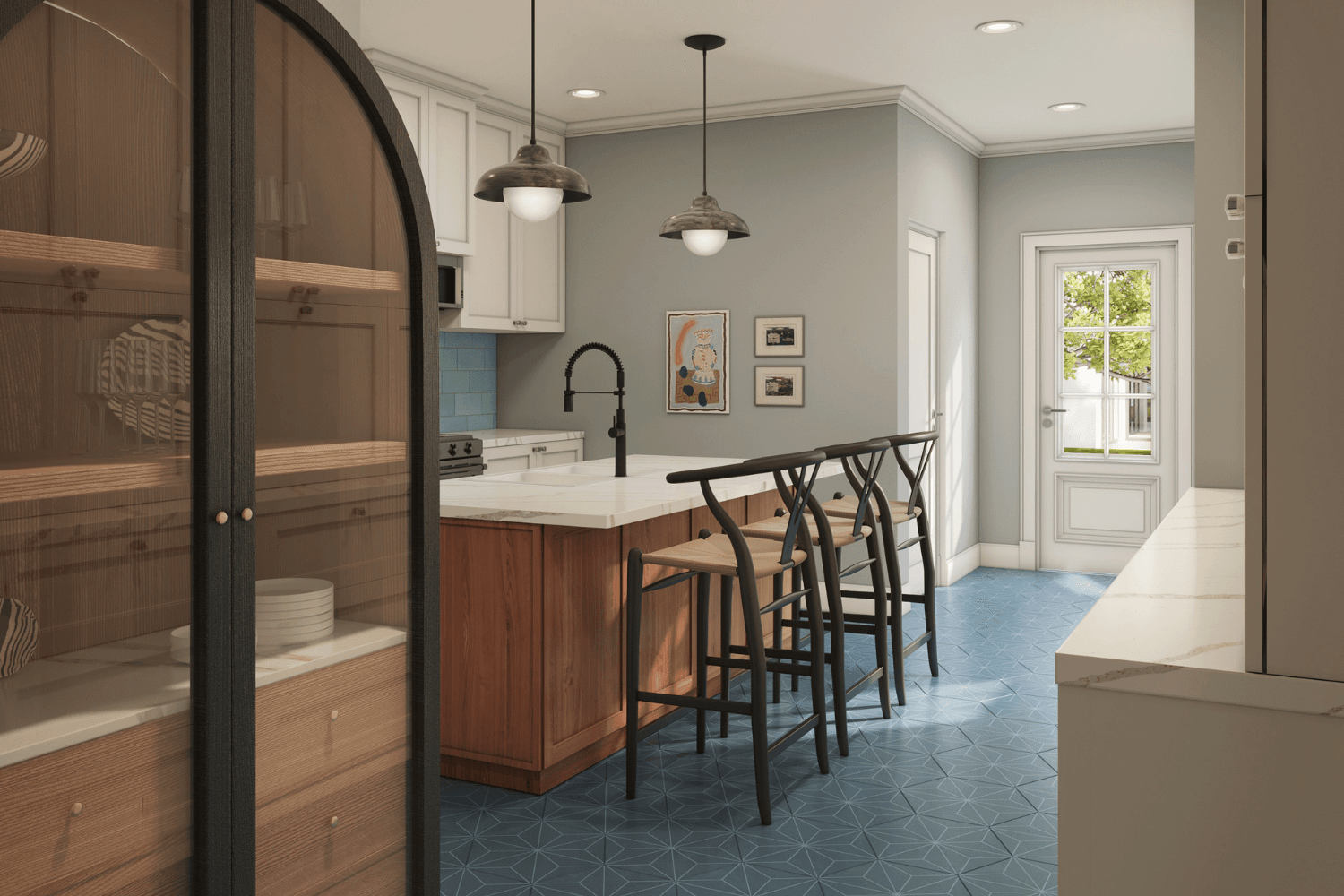
Every design plan I present comes with photorealistic 3D renderings of your actual rooms, with your actual windows and your actual light. You see the walnut credenza next to the teal velvet chair before either of them exists IRL. If something is wrong, we fix it on screen, in one consolidated revision round, and then we order it with confidence.
Nobody has ever regretted a decision they could see and understand in advance.
What turnkey means at the finish line
The word “turnkey” gets thrown around a lot in this industry. Here’s what it means at my firm. Delivery, installation, and styling all happen without you. The art gets hung, the books go on the shelves, the throw blanket gets tossed over the arm of the chair in the way that looks accidental and isn’t. Then you walk in.
I manage every detail from blueprints to finishing touches, so the only thing left on your to-do list is to show up when everything is completed. And then – sit down and relax.
What still lands on your plate
I’d be lying if I said a designer makes every decision for you (and that’s a good thing – it’s your home!). We guide, not dictate.
You’ll still approve each phase. You’ll give feedback, in one round, at defined points. You’ll contract directly with your builder, because that relationship belongs to you (with me in the role of project liaison). And in the first few weeks, when we’re building the design plan, I’ll ask more of your time than I will for the rest of the project combined.
The difference is that every decision comes to you at the right moment, with the right information, from someone who has already done the thinking. That’s the right level of involvement.
Frequently Asked Questions
Some stress is normal, and it’s typically due to rushed decisions. A renovation with a complete design plan and a single point of coordination (an interior designer) has far fewer surprises, which is where most of the stress lives. If you’re handling daily calls from trades, something upstream wasn’t finished.
When should I hire a designer for a renovation?
Before the builder, or at the same time. The design package is what the builder builds from, so bringing a designer in after construction starts means designing around decisions that have already been poured, wired, or tiled. Not ideal.
No. The builder executes the construction, and you contract with them directly. I design the project, specify everything, coordinate procurement, and manage the details on your behalf so the builder gets clear direction and you get your time back.
It depends entirely on scope, but the design phases before construction typically run about four to six months. Getting things right in the beginning is what keeps the construction schedule from stretching.
Ready TO RENOVATE your home without stress?
If your home is ready for a real plan, and you’d like the next renovation to be the one you don’t have to manage, the next step is to schedule a complimentary Connection Call. About 20 minutes, no pressure – just a chance for us to get to know each other and find out if we’re the right fit for your project. Book your call here.
About Lesley Myrick

Lesley Myrick is an adventurous, intuitive, and exceptionally organized full-service interior designer specializing in designing distinct “forever homes”. She works with high-achieving professionals to create playful, personality-driven and family-friendly spaces that are as functional as they are unique.
At Lesley Myrick Interior Design, we make the typically confusing design process stress-free. Our high-touch, deeply engaged design process means that we accept just 6 large-scale remodeling projects per year.
Learn more about our full-service interior design and inquire here to start your design project.